The Delivered Suite · 2026
Direction B · The Mediterranean Still Life
Oranges & Blue
ValentinaMoreau
Nine pieces · Two carry a name
Nine pieces · Two carry a name
Every piece below is the delivered artwork, not a mock-up of it. The panel is live: put a name in it and watch each piece that carries a name take it, exactly as it does in a real print run.
The pieces that read the same for the whole room carry no name at all — and we say so.
Direction B · Chosen
The invitation as a still life — something Valentina would keep on her shelf long after July.
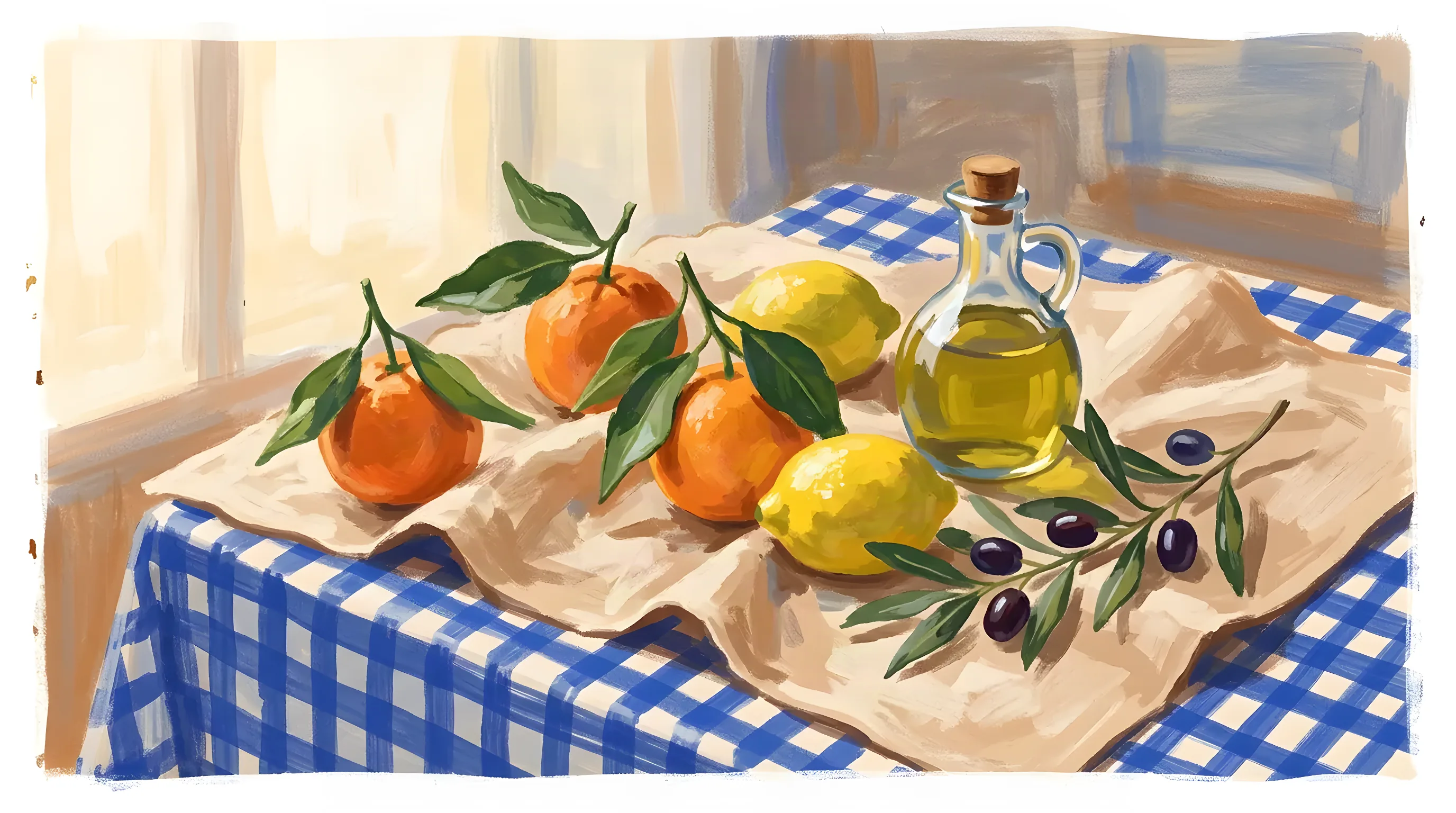
Warm linen ground, hand-painted citrus — oranges, lemons, olive branch — over cobalt gingham. The colour is joyful and alive, but arrives through texture and illustration rather than graphic force. Intimate. Handmade in spirit. The kind of invitation guests tuck into a drawer and find again years later.

Not decoration — every one of these has a job. Five are the inks the pieces below are printed in. The sixth is painted: Citrus Yellow arrives through the illustration, and never as a flat colour.
Aa
Aa
The primary communication piece. Botanical centred above the text; cobalt gingham ribbon frames the card top and bottom. Oslo-style watermark optional for personalisation. Guest name line left open for personalisation.
This piece already carried a guest's name — it shipped showing real ones. The platform simply sets each guest's own.
{{GUEST_NAME}}
Each guest's own code — live, and it scans. No piece in this suite carries a zone for it, so it reaches the guest through their personal link.
Five-course evening menu with wine note. Smaller botanical at the top; Cormorant for course names, italic for descriptions. Cobalt tint box for the sommelier note. Gingham top and bottom.
Delivered here as one design. It is a piece the platform personalises per guest wherever a suite ships its platform edition.
no placeholders
A6 landscape tent-fold. Front face: table number in Grove Green, guest name in Cormorant italic at 38pt, botanical corner accent. Back face: event reference printed upside-down. Gingham left-edge stripe on the front.
This piece already carried a guest's name — it shipped showing real ones. The platform simply sets each guest's own.
{{GUEST_NAME}}
A6 landscape reply card, enclosed with the invitation. Guest circles attendance; dietary notes left open for handwriting. Botanical corner, cobalt tint reply box. Returns by 30 June.
no placeholders
A5 portrait tent card. Number set in Cormorant Garamond at display scale — legible across the table. Gingham top ribbon, botanical lower-right corner, event reference in Grove Green at foot. Shown as a set of three.
It reads the same for the whole room, so it prints once.
no placeholders
A5 portrait standing card on the bar and cocktail tables. Welcome aperitivo, a signature cocktail named for the evening, curated wines and soft options. Same botanical header as the dinner menu — smaller, lighter.
It reads the same for the whole room, so it prints once.
no placeholders
Large landscape display board at the estate entrance. Botanical centred; event name in full display scale. Doubles as a seating announcement — guests collect their place card from the welcome table on arrival.
It reads the same for the whole room, so it prints once.
no placeholders
no placeholders
DL insert for the mailing envelope. Cobalt gingham covers the full liner face — the pattern that lives as a ribbon on every other piece here becomes the whole interior. Monogram VM in Cormorant italic, nothing else. The surprise when the envelope is opened.
It reads the same for the whole room, so it prints once.
no placeholders
Every impression below is the same delivered file — Place Card — with a different guest's name set into it, exactly as it comes off a real run. Not a mock-up: it is the piece shown above, personalised by the same code. The names are examples.
12 guests shown across 3 sheets. A real list simply continues — one run, one file per guest.
At the guest's own link the platform renders Invitation — this file, not a separate digital version — and adds a reply panel to it. On the left, as it prints, with no trace of the panel. On the right, as it opens.
The panel is injected by the platform, not drawn by the design, and the printed card carries no trace of it. The right-hand state shows how it reads; for the platform to compose it into this piece, the file declares the empty container the Living Invitation expects.
The nine designs above are delivered as print-ready files — at the true trim size, with the backgrounds and the fonts the printer expects. The two that carry a name become a personalised file for every guest on the list.
Two of the nine pieces carry a name. The rest read the same for the whole room, so they print once — and each one says so.
Each guest's own code opens their own page. The same code, read at the door, marks them arrived — so the host knows who is in the room without a clipboard.
The table numbers above are generated from the event's own list, not typeset one at a time. The seating chart is drawn in the portal from that same list, so moving a guest between tables is a change of one field — not a new piece of artwork.
The same card, at the same guest’s link, with a reply panel drawn into it. Not a separate digital version in a different style — the design itself, continued. It is further down this page, in both of its states.