Whitlock · Varma · Six Senses Uluwatu · 3–5 September 2027
Two worlds for three days
You gave us two things and said you did not know whether they went together — Ruth's
forty summers of painting the same stretch of water, and Lakshmi's cabinet of blue-and-white.
They are the same blue, which you noticed and nobody else ever has. Here is each of them taken
seriously and built out to all nine pieces. Only one gets made.
Direction A
The Cabinet
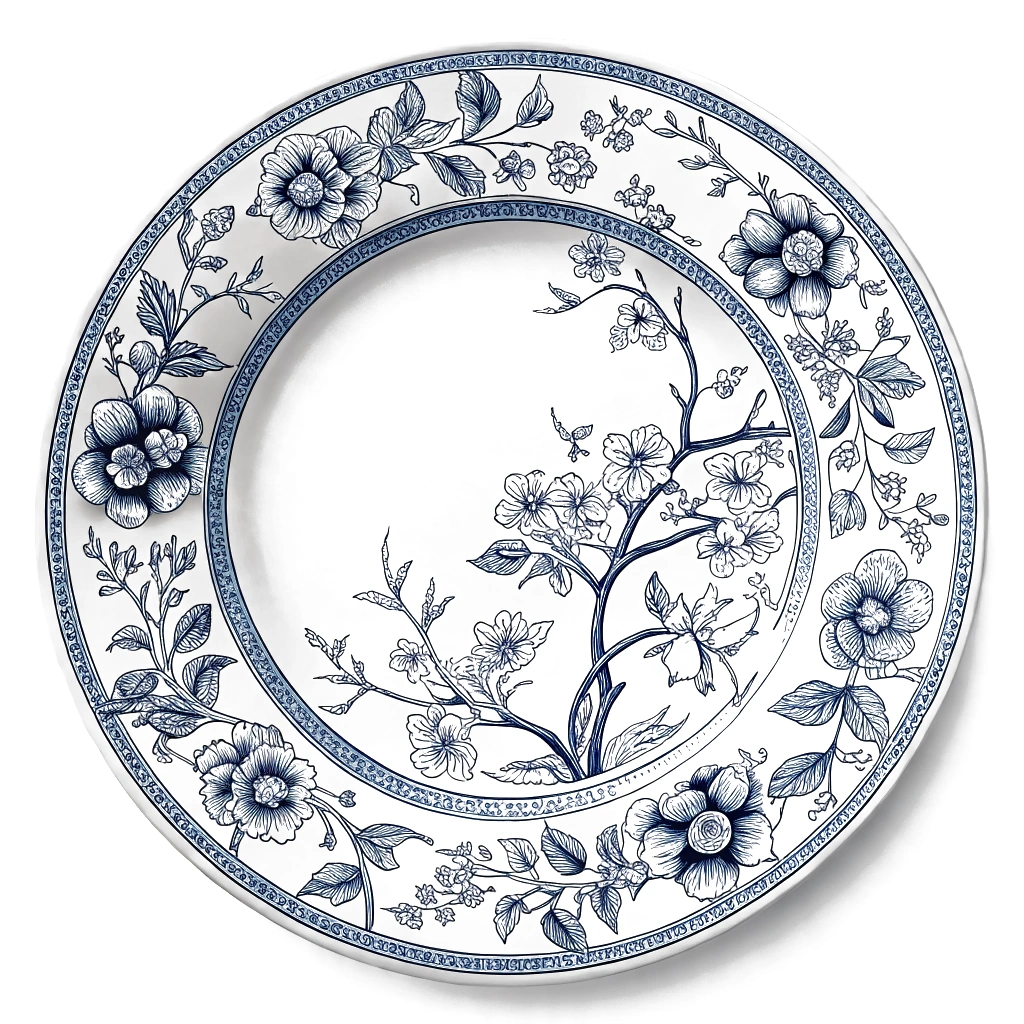
The card is one piece from Lakshmi's cabinet. Cobalt transfer-printed on a white
glaze, the pattern doing the holding, and every fact set into the clearing the pattern leaves —
the way a plate carries its mark. Chinese pottery painted for an Indian market, landed on the
Coromandel coast, and now the stationery for a wedding on the other side of the same ocean.
One ink and the glazeCobalt on white and nothing else. No gold, no third colour, no tint — the discipline of export porcelain is that a whole world is made from one pigment and the body it is fired onto.
Printed, never paintedA transfer-printed line: fine, closed, evenly weighted, shaded by stipple rather than by wash. The surface being imitated is glaze, not paper, and glaze has no tooth.
The border is the pieceEvery card is a decorated rim with a clearing in the middle of it. The pattern does the holding; the type sits in the space the pattern leaves.
Type is set, not writtenBodoni's hairline-to-stem contrast is the same contrast as a cobalt line on a white body. Nothing on any piece is in a hand.
The rim pattern at card scale — a broad decorated border and a smooth empty
centre. The whole world is this one relationship, repeated.
The cartouche — porcelain's only answer to text. Beautiful, and a box.
The type
Elodie & Nikhil
Bodoni Moda · display SATURDAY · 4 SEPTEMBER 2027 Jost · tracked capitals · the facts
Cobalt
#2E5C8A
the only ink
White glaze
#FBF8F2
the body
Cobalt, thinned
#4A7BA8
stipple & shade
Gilt
#C08F45
one hairline, or none
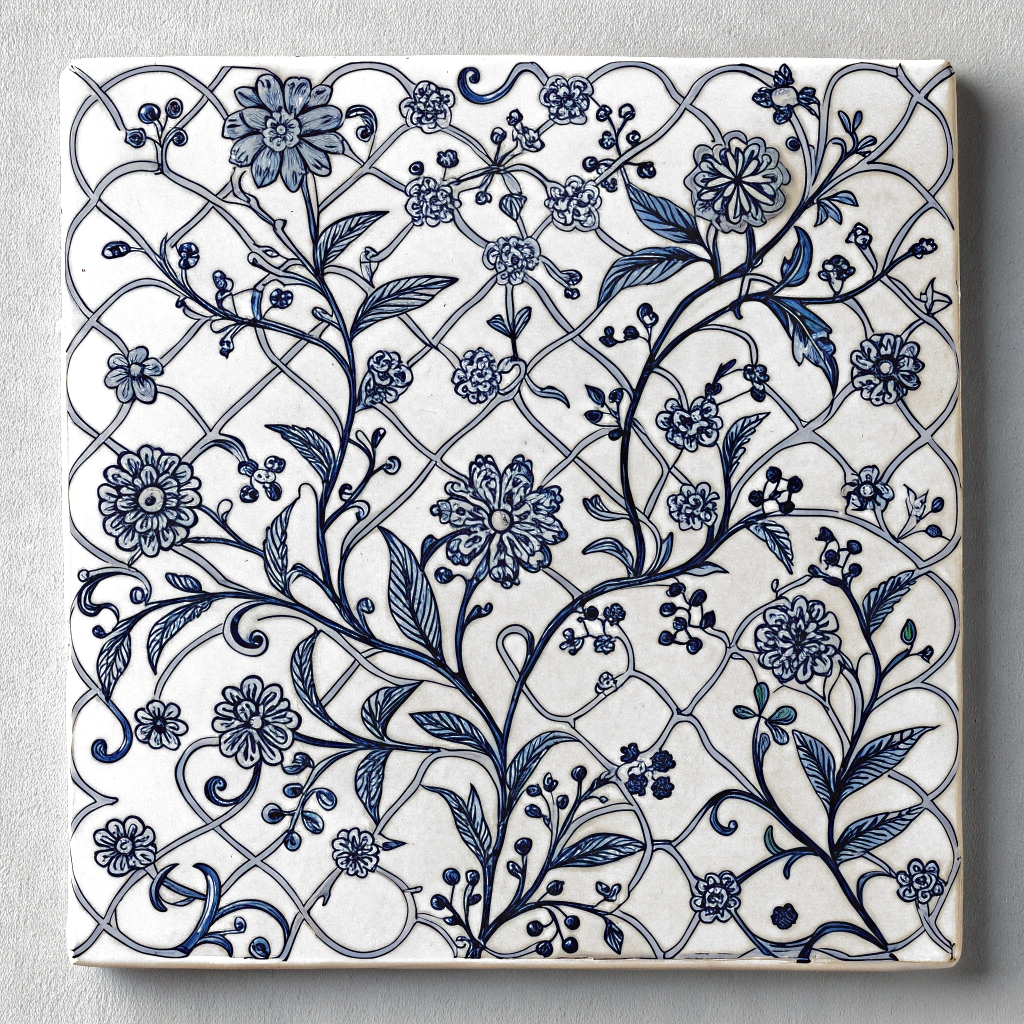
The repeat, uncropped — the envelope liner, and the only place the pattern runs
edge to edge.
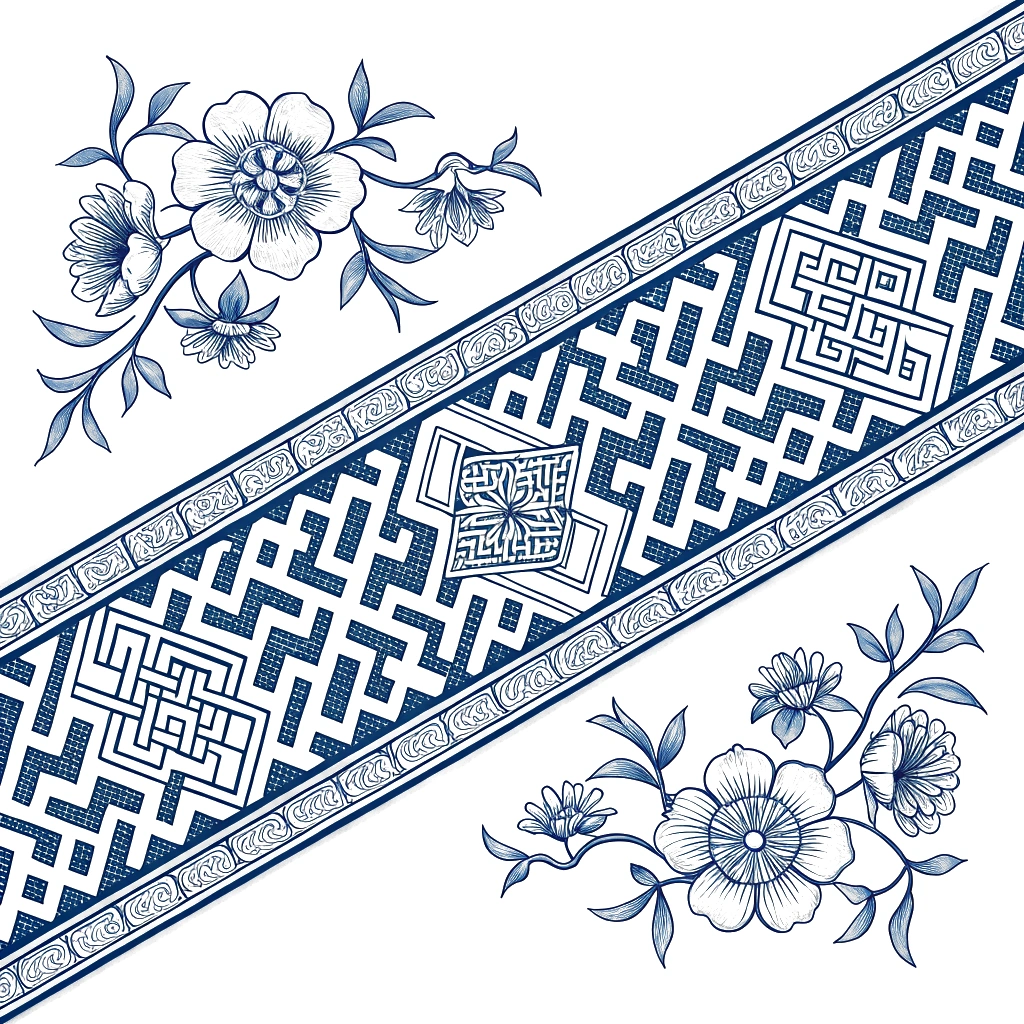
The fret band — one pigment, so every level of emphasis is made from density.
The material tray
A true white body, high-gloss. Blue-and-white needs it — which is the world's
quarrel with your one colour instruction.
Cobalt, at full strength and as a 40% stipple. There is no third ink.
The engraved line at print scale — closed, even, and never varying in weight.
A single gilt hairline at the rim, if you want it. It is the one thing in this
world that shines, and it can be left out.
Where it comes from — Lakshmi collects Chinese export blue-and-white: pottery made in China, painted for an Indian market, landed on the Coromandel coast. It is in a cabinet in Chennai and it is the only object either family named twice.
How a schedule gets on it — Porcelain has one answer to text and it is the cartouche: a reserved white shape held inside the pattern. It is beautiful and it is also a box, which is the device the brief rules out by name.
What one pigment buys — Because there is only cobalt, every level of emphasis has to be made from density instead of colour. That is the world's real discipline and its real limit.
What each of your nine pieces becomes here
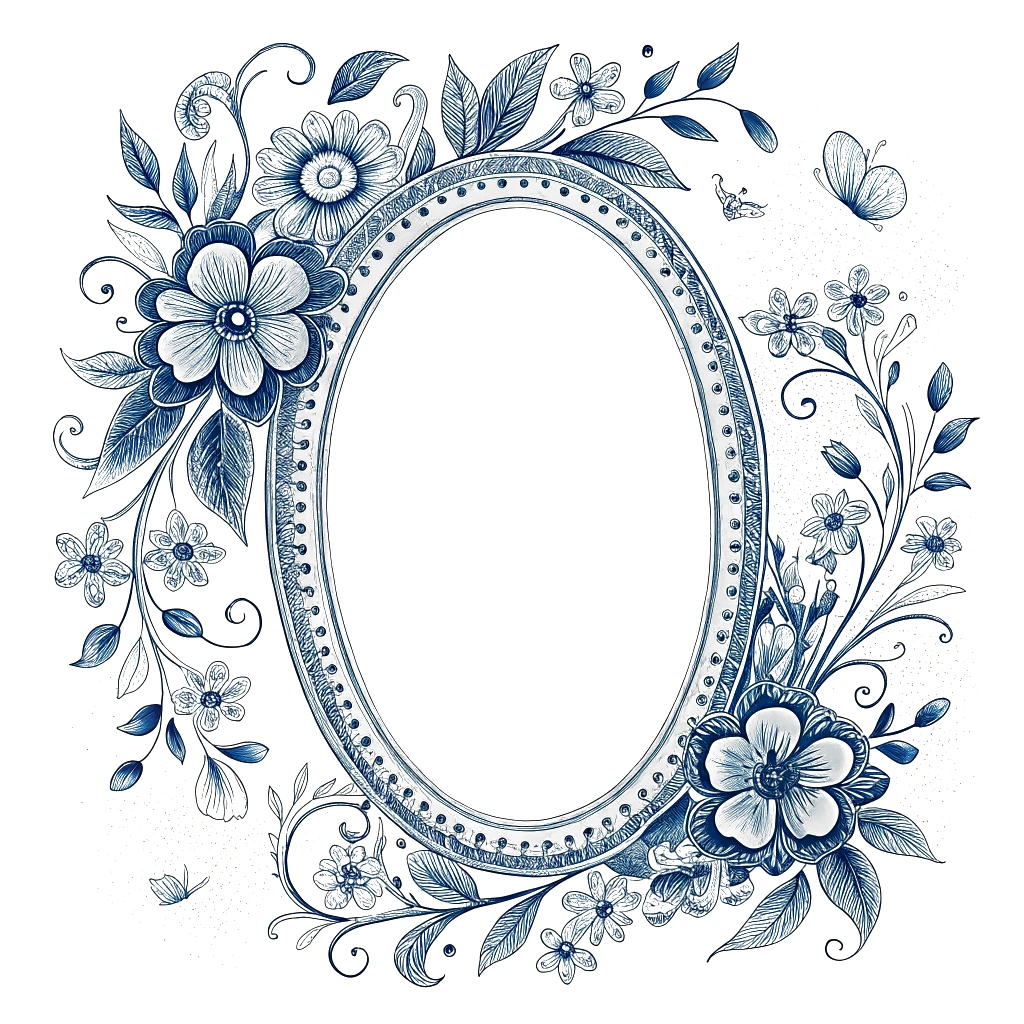
InvitationPortrait, trimmed square. A printed cobalt rim on a white body with a plain oval clearing at the centre; the names set in Bodoni inside it, the date beneath in tracked small capitals. The rim is the 1780s Coromandel pattern redrawn at card scale.
The Wedding EventsLandscape. Three days set as three ruled registers inside one large cartouche, the way a plate carries its maker's mark and its pattern number. This is the piece the world struggles with, and the closing table says why.
Save the DateLandscape and smaller. The rim alone, and one line of Bodoni in the clearing.
Envelope LinerThe full repeating pattern, uncropped and unbroken — the one place in the suite where the porcelain is allowed to run edge to edge.
Menu CardA tall slim leaf. Courses in tracked capitals, dishes in Bodoni, a small cobalt sprig flush left against every vegetarian dish.
Order of CeremonyPortrait. Eight movements as a ruled list inside the cartouche.
Place CardsSmall and landscape. A corner sprig, the guest's name in Bodoni, the table beneath.
Table NamesSmall and landscape. Twelve cards, each with the pattern quartered around a plain centre.
Welcome SignA2. The pattern enlarged until the individual blossoms are the size of a hand — the one moment the world is properly grand.
Choose this ifYou would rather the wedding carry the family's own
object than the couple's own weather. It is the more formal of the two, it is the one Lakshmi
will recognise across a room, and it treats a hundred-year-old pattern as something to be
continued rather than referred to.
Still open in this world
The cartouche is a box, and the brief rules boxes out by name. This world says so itself and then puts the three-day schedule inside one. Either the schedule leaves the cartouche or the rule bends — and that is the largest unanswered thing here.
Whether the gilt hairline is in or out. Offering it as optional is not a decision. One hairline of gold either belongs in a one-pigment world or it does not, and the answer changes what “the discipline of export porcelain” means.
Whether a true white glossy body exists on paper. Blue-and-white needs the glaze; the brief asked for uncoated. Nobody has yet found the stock that satisfies both, and a compromise here quietly costs the world its subject.
Whether twelve table names can be quartered and stay porcelain. The pattern was drawn for one plate, not for a set of twelve deliberate differences, and twelve variations may turn a rim into an exercise.
Direction B
The Water Between Us
Ruth tore her sheets out of the block, so every one of them has a soft wavy edge and
the paint always stopped before it got there. So does every piece of this suite. The card is cut to
that wave, a band of ocean blue is painted along the cut, and every moment of the three days is
given its own small painted object — so ninety-six tired people read the schedule as pictures
before they read it as words.
The edge is the ideaEvery piece is cut to the same soft freehand wave — the deckle of a sheet torn out of a watercolour block, not a scallop and not a rounded corner. No two lobes are the same width, because on a torn sheet they never are.
Paint stops before the cutA band of ocean blue follows the die all the way round, painted rather than ruled: it wavers, it pools at the outside of a lobe, and it is cut by the edge instead of politely stopping short of it.
An object per momentEach thing that happens owns one small painted object, and no two pieces in the suite may lead with the same one. That is how a three-day, five-venue schedule gets onto one face without a table, a box, or a single grey rule.
Three registers, and no fourthThe name in gold, written. The fact in blue capitals, letterspaced. The place, once, at the foot. There is no body-copy register anywhere in the suite because no piece needs one.
Three inks and the paperOcean blue, warm antique gold, cream. Sage green appears only where something is actually a plant. Nothing is foiled and nothing shines — Ruth's paintings were matt and so is this.
The Wedding Events
Saturday · 4 September
Six Senses Uluwatu · Bali
The hand, at full size — translucent washes, blooming wet edges, granulation in the
tooth, and bare paper left showing through. Nothing in this world is outlined.
Ocean blue
#4A8DB5
the painted edge
Antique gold
#A9762F
the written name
Ruth's cream
#F7F1E3
the ground, never white
Deep blue
#3A6E93
the facts
Sage
#7E9370
plants only
The type
Ceremony
Alex Brush · the name 4.30 IN THE AFTERNOON Jost · the fact
The mechanism — six moments, six objects, no repeats.
This is what replaces the timetable.
Cotton rag, uncoated and unsized — cream, not white, because Ruth's
paper was cream and you said so.
Ocean blue at full strength for the band, and thinned for the washes. Matt
throughout: no foil anywhere in nine pieces.
Warm antique gold, printed flat — the ink on Lakshmi's 1989 invitation, not a
foil and not a metallic.
The die: 20 lobes on the events card, no two the same width, and one
die per trim so every piece reads as the same torn hand.
Why water, and not a beach — You met in the water at Sennen, you still swim every week, and Uluwatu is the first sea either of you has been in that is warm. The suite draws the water and the things in it. It never draws a beach, a sunset or a palm at dusk, all of which you ruled out by name.
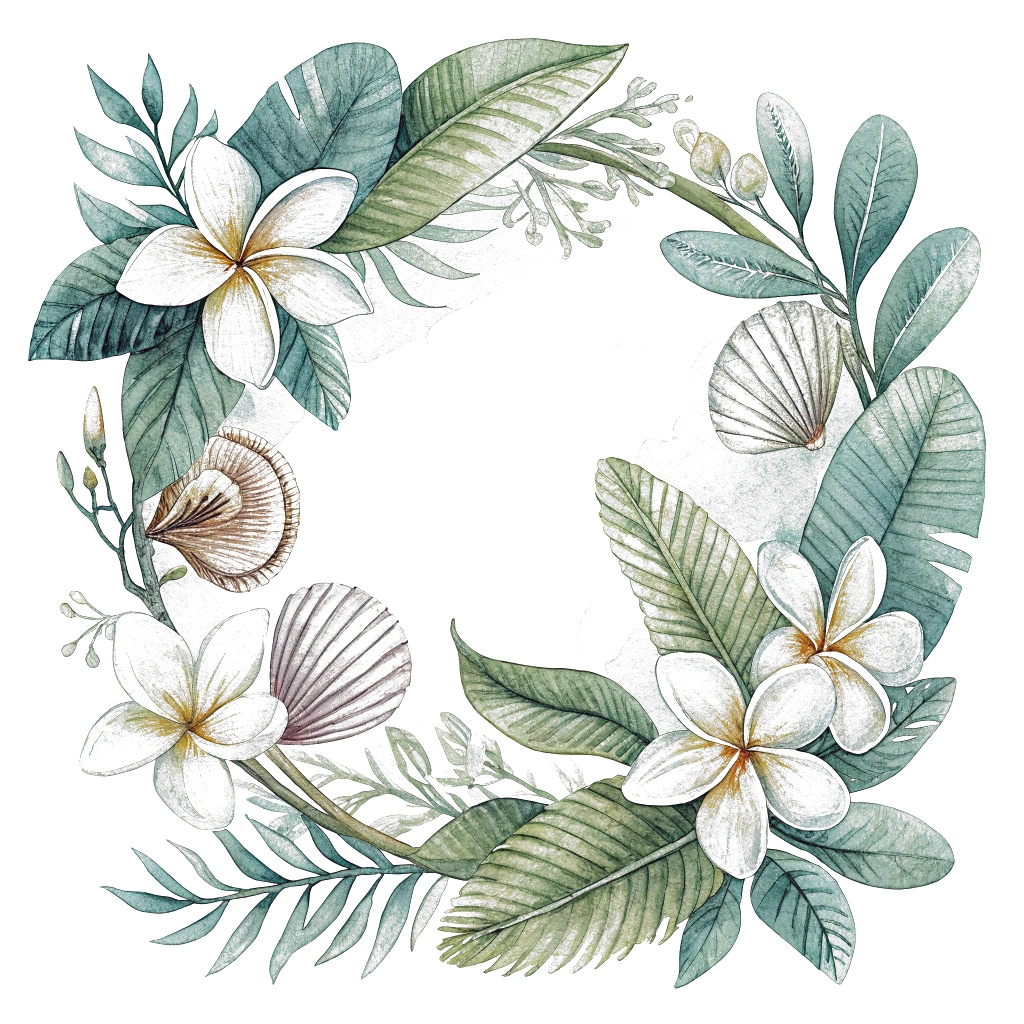
The clearing in the drawing — The wreath is painted with its middle left empty so the monogram can be written inside it. That one move is what lets a busy painted card carry legible type with no panel, no knock-out and no white box, and it is reused on every piece that needs it.
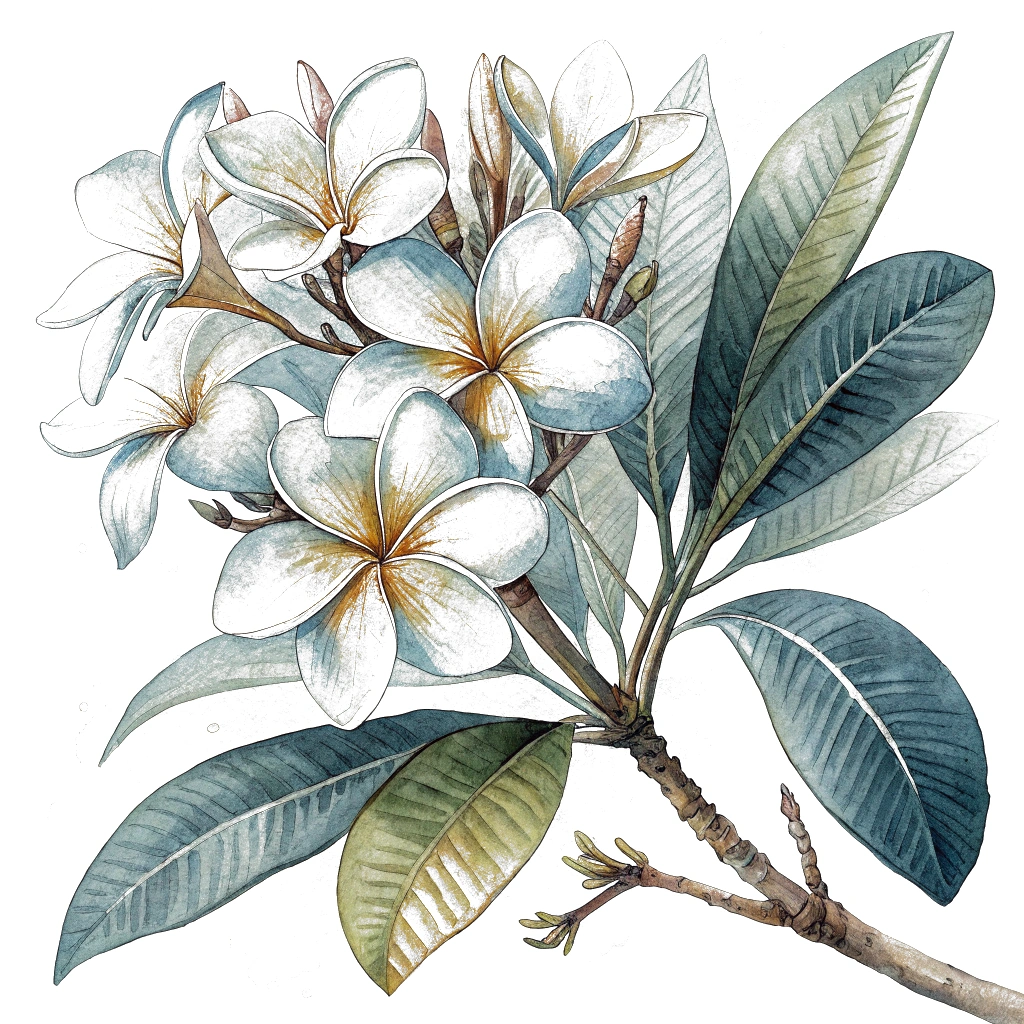
Where the green is allowed — You wrote that green is allowed 'but only where something is actually a plant'. So there is sage in the fronds, the frangipani and the wreath, and nowhere else in nine pieces — not in a rule, not in a border, not behind a word.
What each of your nine pieces becomes here
InvitationPortrait, die-cut. A painted wreath of frangipani and shells at the head with its centre left empty, and the monogram written into that clearing — the drawing makes the hole the type goes in, rather than a panel being laid over the drawing.
The Wedding EventsLandscape, die-cut, and the piece the whole suite is built to serve. Three days in three columns proportioned by what actually happens in them; six painted objects, one per moment; the hour and the room under each in blue capitals. No rules, no rows, no box.
Save the DateLandscape and smaller. One breaking wave, cut by the die at the left edge, and four lines. The plainest piece in the suite on purpose.
Envelope LinerCut to the envelope. Frangipani tiled at four decoration levels — the only piece that is pure pattern and the only one that carries no type at all.
Menu CardA tall slim leaf. A young coconut at the head; courses in tracked capitals, dishes in Cormorant. Every vegetarian dish is marked with Lakshmi's ginger jar rather than a (v), so the dishes carrying the heirloom are the ones twenty-five of your guests will be eating.
Order of CeremonyPortrait. A palm spray at the head, then eight movements — each named in gold at its own slight angle, each with one blue line under it saying who.
Place CardsSmall and landscape. A starfish at the left, the guest's name written large, the table beneath. The name is set at a size that survives a forty-character name and a diacritic.
Table NamesSmall and landscape, twelve of them — Sennen, Serpentine, Porthcurno, Marina Beach, Kovalam, Gwithian, Hampstead, Elliot's, Praa, Padstow, Coromandel, Bukit. Long names step down one size so the twelve read as one set rather than twelve widths.
Welcome SignA2, die-cut, on a rattan lantern. Its type ramp is 2.5× the cards' — it is read from three metres away across a lawn, and a card ramp enlarged is the commonest way a sign goes wrong.
Choose this ifYou would rather send the water than the cabinet. It is
the warmer of the two and the more useful: it is the only one of the two that can put a five-item
schedule on one face without a box, and it is built around the sentence you actually wrote — that a
guest should be able to read the card in the dark, on the way to dinner, with one hand holding a drink.
Still open in this world
Whether a freehand wave can be die-cut nine times and stay freehand. One die means every piece shares the same wave — which is exactly what a torn sheet is not. Nine dies is nine tools, and that is a real number.
Whether tired people read objects faster than words. It is the entire thesis of the schedule piece and it has not been tested on anyone at the end of a long flight, in their second language.
Whether paint may be cut by the die in production. A band that pools at the outside of a lobe and is then trimmed through is easy to paint once and hard to hold in register across a run.
Whether a written gold name survives forty characters and a diacritic. The board raises this at the place card and then does not answer it — and this guest list is exactly where it will be tested.
The choice
What the choice turned on
Both are three days at Uluwatu, both come out of your own two sentences, and both
hold to your palette. What changes is what a piece IS: something printed, or something painted.
A · The Cabinet
B · The Water Between Us BUILT
The object, and the hand it is made in
A piece of Lakshmi's cabinet — transfer-printed, so the line is fine, closed and identical every time.
A sheet torn out of Ruth's block — painted, so the edges bloom, the pigment granulates and the paper shows through.
Format & edge
Trimmed square on all four sides. The drama is in the pattern, not the outline.
Die-cut to a freehand wave on every piece, with a painted band following the cut. This is where the money goes.
What carries the schedule
A cartouche — a reserved white shape held inside the pattern.
Six painted objects, one per moment, with the facts written under them.
Where the blue lands
Everywhere. Cobalt is the only ink and the pattern is made of it.
The edge, and the facts. The middle of every card is left as paper.
Type's job
Bodoni states it, once, in the clearing. Nothing is in a hand.
Alex Brush names the thing; Jost states the hour and the room. Two jobs, never swapped.
The ground
A white glaze, because true blue-and-white needs a white body to sing.
Cream, because Ruth's paper was cream and you asked for it by name.
The risk it carries
A dense repeating pattern is the hardest possible ground to find a room name on — and ninety-six jet-lagged guests have five venues to find.
A painted suite has no straight lines to hide behind. If the hand is not good, there is nothing else on the card.
Direction B — The Water Between Us — is the world that was built. Every piece in the suite descends from it; The Cabinet was not carried forward.